Written and compiled by Imogen Valencia.
The Great Forest makes up a massive portion of Cyrodiil, reaching as far north as Bruma and as far south as Bravil. It borders many different regions, encircling the Heartlands, spanning from the West Weald to the Jerall Mountains, the Colovian Highlands to the Nibenay Basin. When most think of the terrain of Cyrodiil, they will often picture the Great Forest, with its towering trees and bountiful wildlife.
Bergamot
Up north along the Orange Road I have found Bergamot growing. It was only here that I realized there are two varieties of Bergamot- one variety’s flower is bright pink, the other a pale purple. Bergamot grows about to the height of ones hip, and will have a single flower at the top of the stalk. The leaves are oval, tapering into a point at the end, and bright green. The leaves will grow in pairs up the stem. The flower has spiky looking petals that flare out, and the flower is about the size of ones hand. The seeds of the plant can be used to resist disease, damage magicka, or to cause the Dispel or Silence effect. The plants tend to grow around each other, in clusters of three to seven or so.
Clouded Funnel Cap
This mushroom is a pale greyish white color. The cap is wavy, and can range in size from about a hand and a half in width to the size of one’s torso. I’ve found this mushroom in more of the central parts of the Great Forest. The cap of this mushroom can be used to restore and fortify intelligence, or damage endurance and magicka.
Fly Amantia
These mushrooms are fairly common and easy to identify, given their dark red caps with white spots. They vary in size from as large as ones hand, to being small enough to fit in the palm easily. The cap of the mushroom can be used to restore agility and health, and as a poison to cause Burden or shock damage.
Green Stain Cup
This mushroom stands out from other fungi for its color, a rich, vibrant teal. Green Stain Cup grows to about ankle height, and tends to grow in clusters. The cap of Green Stain Cup is upturned, with the edges of the cap folded over. The caps grow about the size of ones hand in width, and can be used to restore fatigue, damage speed and health, or reflect damage. Interestingly, often when I have found this mushroom, I find it growing alongside Summer Bolete. Whether this is simply due to them thriving in similar environmental conditions, or because they have some beneficial pairing when grown together, remains to be seen.
A Note on Dangers:
Black bears are more common in the Great Forest, though due to their size can often be spotted ahead of time and avoided. In the northern portions of the Great Forest there are the much larger brown bears. Do not underestimate the speed of a bear- they can cover more ground more quickly than one would expect for their size.
Timber wolves also live throughout the Great Forest. I’ve come across boar, though this may count as an exciting opportunity for hunting to you rather than a danger. Up north where the Great Forest borders the Colovian Highlands and Jerall Mountains I have seen mountain lions.
There are also dangers from natural beasts and monsters. I’ve come across trolls, though I’ve found it fairly easy to take them out with an arrow from afar. Bears still take me three to five arrows to bring down, but trolls I can consistently bring down with one when you catch them surprised. Whether or not its true that they are susceptible to fire I do not know, and do not care to get close enough to find out.
I have also seen spriggans, which I recommend avoiding. You will likely never see a spriggan if you are not one who strays too far from the main roads into the depths of the forest. If you must fight one, do not bother fighting the animals they conjure- keep your focus on the spriggan, and keep in mind they are able to heal themselves.
Lady’s Smock
While not very common in the Great Forest, I have found Lady’s Smock growing near Chorrol. Lady’s Smock can be identified by its pale purple flowers at the top of the plant’s yellowish green stalk. Towards the base of the plant the leaves are more rounded, whereas up the stalk they lengthen into small, thin leaves. The offshoots of leaves will grow in pairs. The plant will grow four to five flowers in a cluster at the very top of the plant. The flowers are a bit larger than the size of a gold coin, with four petals each. The leaves of Lady’s Smock can be used in potions to restore intelligence, fortify health, resist fire, or damage fatigue.
Lavender
Lavender has multiple stems and vibrant, purple flowers. The flowers grow closely to the stem, and cover about a forearm’s length of the end of each stem. The leaves are simple, thin and angular, and pale green. The plant tends to grow a tad taller than monkshood, about to chest height. The lavender sprigs can be used to restore personality and health, to fortify willpower, or to damage luck.
Monkshood
Monkshood generally grows to the height of ones hip. It has a single stem, with a cone of blue flowers growing at the top. The leaves are yellow-green and quite delicate, with many spiky lobes. The cone of flowers at the top grows about the length of ones hand. The root pulp of monkshood can be used to restore strength, damage intelligence, fortify endurance, or cause the Burden effect.
Morning Glory
Being climbing plants, you can often find Morning Glory hanging over the tops of large rocks. The flowers are purple and resemble a trumpet. The leaves are small and round with a single point at the end, and dark green. If you dig up the root pulp you can use it as a poison to damage willpower and magicka, to cause Burden, or to shield against frost.
Motherwort
Motherwort has small, pinkish-purple flowers, and grows between hip and chest height. The flowers are so small you may not even notice them until you’re right next to the plant. The leaves are lobed and yellowish green. The flowers grow at the same point along the stem as the leaves emerge. Motherwort sprigs are useful for resisting poison, but also can be used in poisons to damage fatigue and to silence spellcasting. Additionally this plant can be used to create potions of Invisibility.
Primrose
You may see primrose tucked away next to stone structures or rocks. This plant is small, barely reaching above ankle height. The flowers are light pink, with dark pink edges along the petals, and yellow centers. The flowers grow in clusters of three to five, with five petals each. The leaves are large and grow just shy of the length of ones hand. The leaves are oblong and more of a pale, cooler toned green. The leaves of the plant can be used to restore willpower and personality, to fortify luck, or to damage strength.
A Note on Deer Hunting:
While deer can be found all across Cyrodiil, they are particularly common within the Great Forest. Often you will share the roads and forests with Imperial Legion Foresters hunting the animals. Keep this in mind as you travel- both that deer are plentiful and can be hunted more easily in this region, but also that these foresters serve as guards on and off the typical paths. You are not as isolated in the Great Forest as you may think.
Sacred Lotus
The roots of the Sacred Lotus are burrowed in the mud of shallow ponds, growing stalks that reach the surface. The leaves are circular, almost a full circle save for a small cutout, resembling a thin slice of pie taken away. The flowers are white with yellow seeds at the center. The seeds of the plant can be used to resist frost, as a poison to damage health, and to give the Feather or Dispel effect.
Somnalius Plant
Somnalius is a unique plant that is easily identified by its cones. The plant grows short, under knee height, though the leaves are quite large, up to the length of ones leg. The leaves are made of intricate, tiny leaflets that branch out from the plant and resemble a bird’s feather. In the center of the plant will be two to three yellowish-brown cones on stalks, about the size of ones hand. The fronds of this plant can be used to restore speed, fortify health, damage endurance, or give the Feather effect.
St. Jahn’s Wort
This plant grows to chest height or taller, and has pale yellow flowers atop a single stalk. Four to six flowers grow in a cluster at the top of the stalk, each about the size of a gold coin. They each have five petals and visible anthers, and the flower can fit comfortably in the palm of ones hand. The leaves a long with rounded tips, and grow in pairs along the stem of the plant. There will typically be six to ten leaves per plant, and each leaf is about the length of one’s hand. The nectar from the flowers is used to resist shock, cure poisons, damage health, or give the Chameleon effect. I’ve found St. Jahn’s Wort growing around the central portions of the Great Forest, not too far south.
Steel-Blue Entoloma
This mushroom is, as the name suggests, a greyish blue color, and grows below knee height. The mushroom grows in the soil, they may often be found near buildings or in the shade of tree canopies. I typically find them growing in clusters of three or so. The cap is raised to a rounded point at the center, and brighter blue along the edges. The cap can be used to restore magicka, resist frost, cause fire damage, or give the Burden effect. I especially recommend looking for this mushroom along the Orange Road to the north.
Strawberries
Strawberry bushes are not difficult to identify, but given their short height may easily go unnoticed. Thankfully, their bright red berries are unmistakable, and will be tucked under the leaves of the plant. Each plant will have two to four small white flowers with a yellow center, and light yellowish green leaves with small lobes. Strawberries can be used to restore fatigue, cure poison, reflect damage, or as a poison to damage health, but on its own simply serves as a wonderful pairing with sweet pastries.
A Note on Inns:
There are many inns and taverns throughout the Great Forest that I have enjoyed staying at. Along the Green Road, to the south of the Imperial City, there is the Faregyl Inn. And despite it’s ominous name, the Inn of Ill Omen is a lovely place to stay. To the North of the Imperial City, along on the Red Road, is a little town called Aleswell, which has an inn. And of course there is the Wawnet Inn at Weye, just outside of the Imperial City.
There is one town, however, I avoid. And I urge you, dear reader, to do the same. It is a small, ramshackle town to the south of Chorrol. Do not ask about it in Chorrol. It is not spoken of for good reason. Do not seek it out. It is cut off from the main roads, so you will only stumble upon it if wandering through the wilderness. Do not stay at the inn. Continue on to stay in Chorrol instead. Even if night has already fallen. It is worth it.
Let it’s name and buildings rot away until there is nothing left of it.
Summer Bolete
Summer Bolete is a pale, off-white and sometimes light grey mushroom. Unlike Clouded Funnel Cap the cap of the mushroom is not wavy. It grows to ankle height, and has a wider base compared to most mushrooms. It is a solid color across all of the flesh of the mushroom. I typically find them growing in clusters of four or more. The cap of the mushroom can be used to restore agility, damage personality and endurance, or provide the Shield effect.
Tiger Lily
Tiger Lily grows to about chest height. The leaves are thin and long, and a pale green color. The leaves grow along the single central stem in clusters of three. The flower at the top of the stalk is bright orange, with dark maroon spots in the center, and maroon colored anthers that stick out of the flower. The petals would resemble a trumpet, but are peeled back to reveal the anthers. There are typically two flowers per plant. The nectar from the flowers can be used to restore endurance, damage strength and willpower, and, wondrously, as a component in potions of Water Walking. I’ve found Tiger’s Lily growing more within the central portions of the Great Forest.
Viper’s Bugloss
Along the full length of the stem Viper’s Bugloss grows dark blue flowers, about a dozen or two. Each flower is paired with a spiky, yellow green leaf. The leaves of this plant can be used to resist paralysis, cause Burden, cure paralysis, and most interestingly, to give one Nighteye to see in the dark.
Water Hyacinth
Water Hyacinth can be found along the water’s edge of small ponds. The flowers of the plant are purple, lighter along the edges of the petals. The leaves are round, about the size of the palm of the hand, with lighter yellow green edges and dark green centers. Each stalk has about three flowers, and each plant typically grows two to three stalks. The nectar from the flowers can be used as a poison to damage fatigue and luck, or to restore and fortify magicka.
A Note on Potions and Poisons:
Below I’ve listed out some of the potions and poisons that can be created using ingredients found in the Great Forest.
Fly amanita and the cap of summer bolete can be used to restore agility. Somnalius fronds and lady’s smock leaves can be used to fortify health. And if you’re able to catch yourself a deer, the venison can be combined with St. Jahn’s wort nectar for a Chameleon potion.
Just as you are able to create potions with positive effects, you can also select ingredients for their negative effects to create poisons. Fly amanita cap, monkshood root pupl, morning glory root pulp, steel-blue enoloma cap, and viper’s bugloss leaves can all be used to create a poison of burden. Clouded funnel cap, summer bolete cap, and somnalius fronds can be used to create poisons that damage endurance. And primrose leaves and tiger lily nectar can be combined into a poison to damage strength.
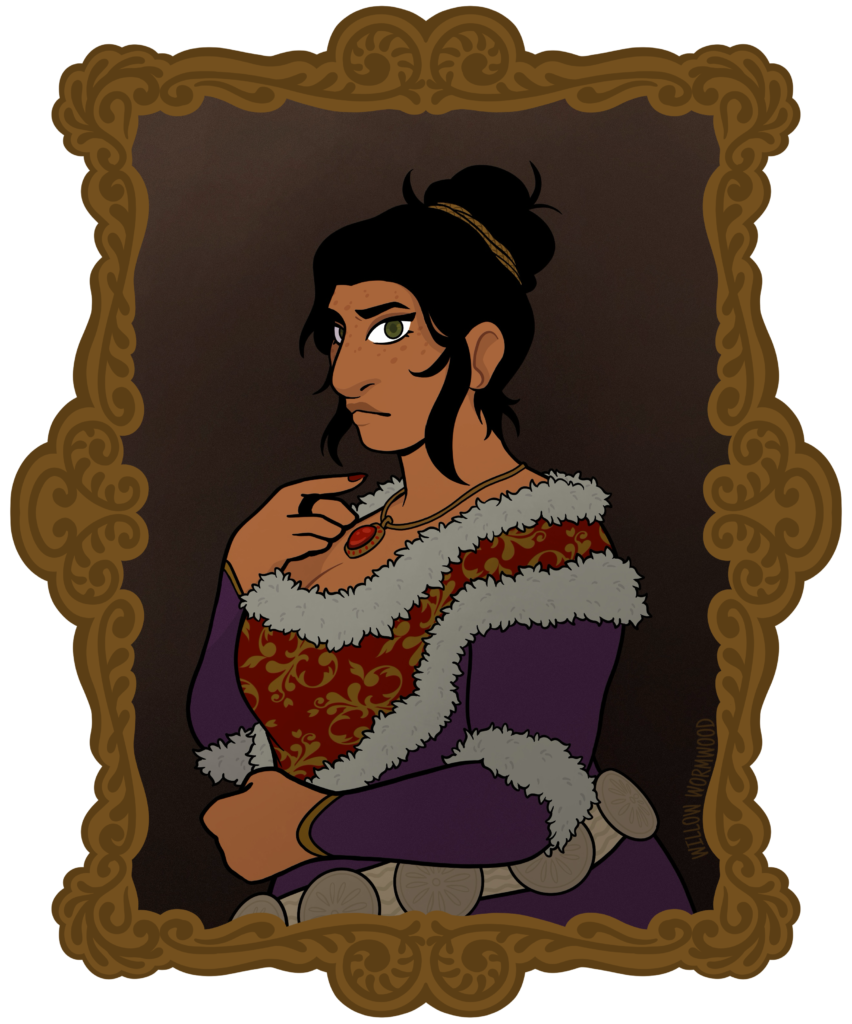
Imogen Valencia, Author of “A Forager’s Guide to Cyrodiil”
Leave a Reply