Written and compiled by Imogen Valencia.
The Gold Coast may seem barren, but the longer you travel around its rocky cliffsides and sandy paths, you’ll quickly learn there are many useful plants to be found. Bridging the gap between Valenwood and Hammerfell, bordering the Abecean sea, expect a hot, arid landscape. Thankfully for us foragers, the Gold Coast is not merely empty desert sands, and still hosts a vast range of wildlife.
Aloe Vera
This plant is typically easy to identify, given its unique shape. The leaves are about the length of ones arm and stay close to the ground. The leaves are thick, covered in shallow spines, and pale green in color. The flowers stand on stalks about as tall as ones hip, though some easily reach above the full height of a person. The flowers are pale yellowish orange, with green towards the tips of the petals. From a distance the flowers resemble a cone, though on closer inspection each flower seems to consist of many tiny capsules of petals. Each plant typically grows three flowers. The leaves of the plant can be used to restore fatigue and health, or to damage magicka.
Arrowroot Plant
Arrowroot plants grow quite tall, about the full height of a person. The plant has very thin stems, which stand out compared to the large, oblong leaves. The leaves will be dark green and about a hand and a half in length. The flowers are small, pale purple, and grow in clusters of three. There will only be two or so clusters per plant. The flowers resemble trumpets, with a flared base and mouth. The plant can be used to restore agility, fortify strength, or damage luck.
Bergamot
Bergamot grows about to the height of ones hip, and will have a single, bright pink flower at the top of the stalk. The leaves are oval, tapering into a point at the end, and bright green. The leaves will grow in pairs up the stem. The flower has spiky looking petals that flare out, and the flower is about the size of ones hand. The seeds of the plant can be used to resist disease, damage magicka, or to cause the Dispel effect. The plants tend to grow around each other, in clusters of three to seven or so.
A Note on Yellow Flowering Plants:
Especially along the Gold Coast, there is an abundance of yellow flowering plants that can be difficult to discern from one another. Some of these yellow flowering plants include fennel, goldenrod, lady’s mantle, St. Jahn’s wort, and yellow varients of flax and ginseng.
I will take care in the descriptions of these plants to make note of how to correctly identify them compared to the other yellow flowering plants found along the Gold Coast. Thankfully you may find opportunities to see the plants growing near each other. It is easier to identify a plant when able to compare and contrast its features to those around it.
Fennel
Fennel grows up to the height of ones chest. The key difference between fennel and other yellow colored plants are that the flowers of fennel are much smaller, and the leaves and stem of the plant are a paler, bluish-green hue. Fennel has delicate, small leaves with many spiny lobes on them that grow close to the stem, and only grow to the size of a gold coin, if that. The flowers are clusters of tiny dotted yellow buds, and much flatter overall than other yellow flowering plants such as Goldenrod or Lady’s Mantle. Fennel seeds can be used to restore fatigue, or as a poison to damage intelligence and magicka.
Flax
Along the border between the West Weald and Gold Coast I found a shrine with flax, so while it seems uncommon in the Gold Coast, I thought it best to make mention of it in case it grows in other areas I have not come across myself. I found two varieties growing, one with dark reddish pink flowers and one with pale yellow flowers. While the colors may differ, the effect of the seeds and overall physicality remain the same. Flax have small flowers, about the size of a gold coin. The leaves are very tiny. Flax seeds can be used to restore magicka, and in potions for the Feather and Shield effect.
Ginseng Plant
Also along the border between the West Weald and Gold Coast I’ve found ginseng plants, though it is a rarity to be sure. The plant is short, only growing about knee high. The leaves are oval, with visible veins and small spiky lobes at the ends, coming together in a point. The leaves are yellowish green and clustered all around the bottom of the plant. At the end of two or three stalks will be a near complete orb of tiny, oval flowers. I have found two varieties, one with red flowers, and another with yellow flowers. Ginseng can be used to damage luck, cure poisons, or cause the Burden effect.
Goldenrod
Goldenrod is the largest of the yellow flowering plants of the Gold Coast, growing well over the height of the average person, with some plants reaching an additional head or two in height. What appears to be a singular large flower from afar is actually a large cluster of tiny flowers, which grows at the end of each stalk of the plant. As mentioned before, the flowers are golden yellow, and the clusters of flowers can be twice as big as ones head. The leaves are long and angular, growing up along the stalks of the plant, with spiny lobes. The white seed pods of the plant can be used to restore strength, cause the Silence effect, and give the ability of Water Breathing.
Lady’s Mantle
Lady’s Mantle is quite close in shade to Goldenrod, both being golden yellow, but the plant doesn’t grow above ones hip in height. The clusters of flowers are much smaller, and the flowers are spiky, with dark brown spots along the petals. The leaves grow at the base of the plant, with circular, rounded lobes. The leaves tend to be a slightly brighter shade of green than Goldenrod, and can be used to restore health, damage endurance, or give the Nighteye effect to see in the dark.
A Note on Dangers:
The fauna of the Gold Coast can be particularly dangerous for the inexperienced traveler. Timber wolves live along this region, even more hardy than the average wolf of Cyrodiil. Mudcrabs are common along the shores, though not particularly dangerous and easily avoided. I have, in the past, been caught off guard by pairs, or groups of three mudcrabs, at a time. Boars may also pose a threat, being much more common along the Gold Coast. Though if given a wide berth they will usually not attack.
By far the greatest danger from wildlife is the mountain lion. I have found it incredibly difficult to spot a mountain lion before it spots me, and they descend upon you in great leaps and bounds with a flurry of claws and teeth. More than any other natural fauna, it is the mountain lion I dread running into the most.
Lily of the Valley
One of my favorite plants, Lily of the Valley grows about to ones hip in height and has beautiful, drooping white flowers. The flowers grow along one or two central stalks and resemble small white bells, cupped and downturned. The leaves are quite large, oblong and tapering into a sharp point. The leaves furl around the stalks of the plant, and are a yellowish green in hue. They are about as long as ones arm, and the length of a forearm in width. The nectar from the flowers are often confused with Tiger Lily Nectar, due to its appearance and the fact that they hold the same alchemical properties. The nectar can be used to restore endurance, damage strength, and as a component in potions of Water Walking.
Mandrake
Mandrake is a small plant, only growing about ankle height. The leaves are yellowish green, with wavy edges and clear veins. The flower is purple, with a white center with white anthers. Each flower has five petals, and each plant grows about five flowers. Mandrake root can be used to cure disease, resist poison, and damage agility. So far I have found mandrake growing on the westernmost and northernmost hills of the Gold Coast, far away from the city of Anvil.
Milk Thistle
I have only found one patch of milk thistle growing so far. It was near the Gold Road, a short ways behind the Brina Cross Inn. I am sure there must be more patches of it growing throughout the Gold Coast, and have simply not had the luck to find more myself. Milk Thistle has a single stalk and grows within a range of knee height to chest height, but tends to be on the smaller side. The plant is a bright, yellowish-green, and has thin leaves with spiky lobes, about the length of ones hand. At the very top of the plant there will be a single flower. The flower portrudes from a rounded capsule, only revealing the very ends of the flowers petals. The petals are a pale purple hue. Milk Thistle seeds can be used to cure paralysis, cause the Light effect, or a poison dealing frost damage.
Tiger Lily
Tiger Lily grows to about chest height. The leaves are thin and long, and a pale green color. The leaves grow along the single central stem in clusters of three. The flower at the top of the stalk is bright orange, with dark maroon spots in the center, and maroon colored anthers that stick out of the flower. The petals would resemble a trumpet, but are peeled back to reveal the anthers. There are typically two flowers per plant. The nectar from the flowers can be used to restore endurance, damage strength, and as a component in potions of Water Walking.
Sacred Lotus
When traveling along the coastline, you may find clusters of Sacred Lotus flowers growing in the water. The roots of the plant are burrowed in the sand, growing stalks that reach the surface of the ocean. The leaves are circular, almost a full circle save for a small cutout, resembling a thin slice of pie taken away. The flowers are white with yellow seeds at the center. The seeds of the plant can be used to resist frost, as a poison to damage health, or in potions to give the Feather effect.
St. Jahn’s Wort
This plant grows to chest height or taller. Four to six pale yellow flowers grow in a cluster at the top of a single stalk, each about the size of a gold coin. Each flower has five petals and visible anthers, and the flower can fit comfortably in the palm of ones hand. The leaves a long with rounded tips, and grow in pairs along the stem of the plant. There will typically be six to ten leaves per plant, and each leaf is about the length of one’s hand. The nectar from the flowers is used to resist shock, cure poisons, or damage health.
Water Hyacinth
Water Hyacinth can be found along the Abecean Sea’s shoreline. The flowers of the plant are purple, lighter along the edges of the petals. The leaves are round, about the size of the palm of the hand, with lighter yellow green edges and dark green centers. Each stalk has about three flowers, and each plant typically grows two to three stalks. The nectar from the flowers can be used as a poison to damage fatigue and luck, or to restore magicka.
A Note on Potions and Poisons:
As before, I will list some of the potions and poisons that can be made from the plants foraged along the Gold Coast. It is important to make due with what you have, especially if you are on the move often.
Ginseng and St. Jahn’s Wort nectar can be used to cure poison. Flax seeds and Sacred Lotus seeds can be used for potions of Feather. Aloe Vera leaves and Fennel seeds can be used to restore fatigue.
Of course, there are always poisons to be made as well. Sacred Lotus seeds and St. Jahn’s Wort nectar can be used in a poison to damage health. Bergamot seeds, Fennel seeds, and Aloe Vera leaves can be used in poisons to damage magicka. And Arrowroot, Ginseng, and Water Hyacinth nectar can be used in poisons to damage luck.
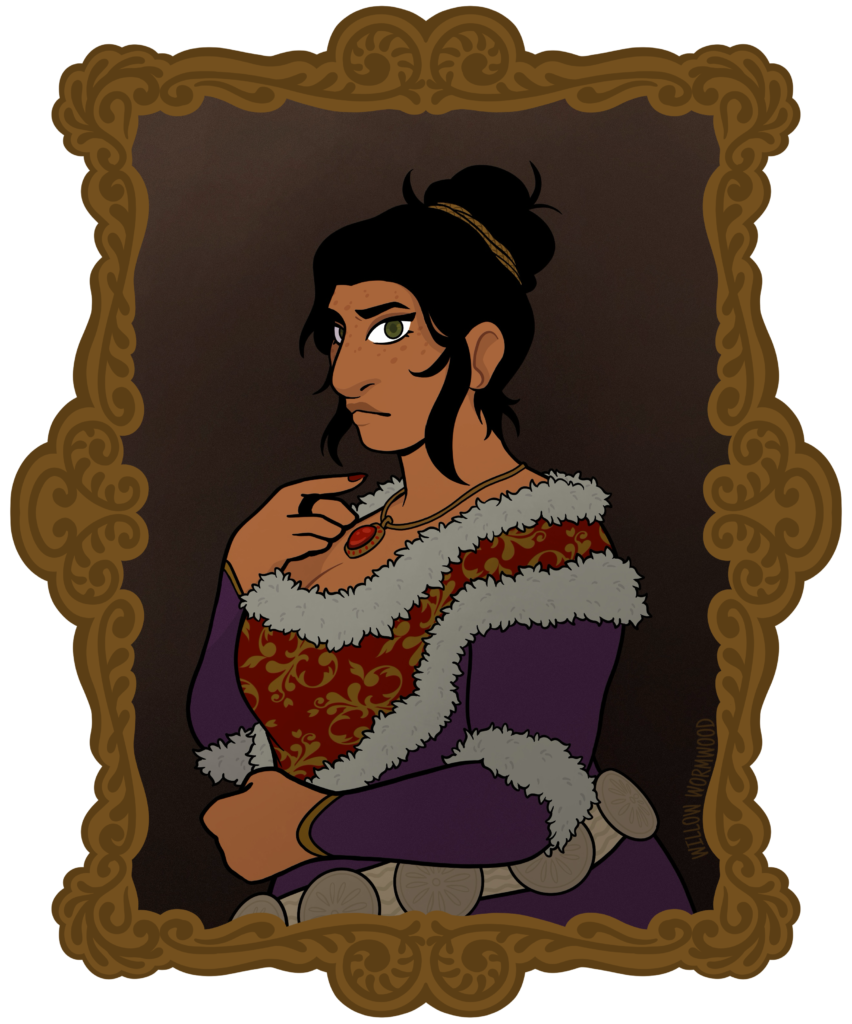
Imogen Valencia, Author of “A Forager’s Guide to Cyrodiil”
Leave a Reply