Written and illustrated by Imogen Valencia.
Of all the places I’ve gone to forage, the meadows surrounding Skingrad are by far my favorite. I have found the West Weald to hold the strongest biodiversity of Cyrodiil’s regions, with two dozen or so foragable plants and fungi to be found. The open meadows allow one to forage more easily, and this, along with its relative safety compared to other areas of Cyrodiil, make it a wonderful spot for the beginner forager.
Typically I begin my journey out of the western gate of Skingrad, and head for a small pond to the northwest. I recommend going early in the morning, just before dawn. The sunrise is lovely to witness on the shores of this tiny pond. You can find Sacred Lotus and Water Hyacinth at this pond, though I will list them later. This guide will be organized alphabetically, to allow for easier referencing.
I forage primarily for ingredients as an alchemist, though this guide may also prove useful to those who wish to forage as a supplement to the food they can acquire through farming or in the city market. While there are a few ingredients on this list that can be sold at alchemy shops for a fair price, I would dissuade readers from foraging for the sole purpose of making a profit. I have found this is the quickest way plants disappear from their environments. Often it is not those who simply wish to find extra food for their families, and instead those who seek to profit off the natural world without any regard for sustainability. I urge you to take only as much as you need. Leave enough for the plants to grow back, so everyone will have more in the future.
Alkanet
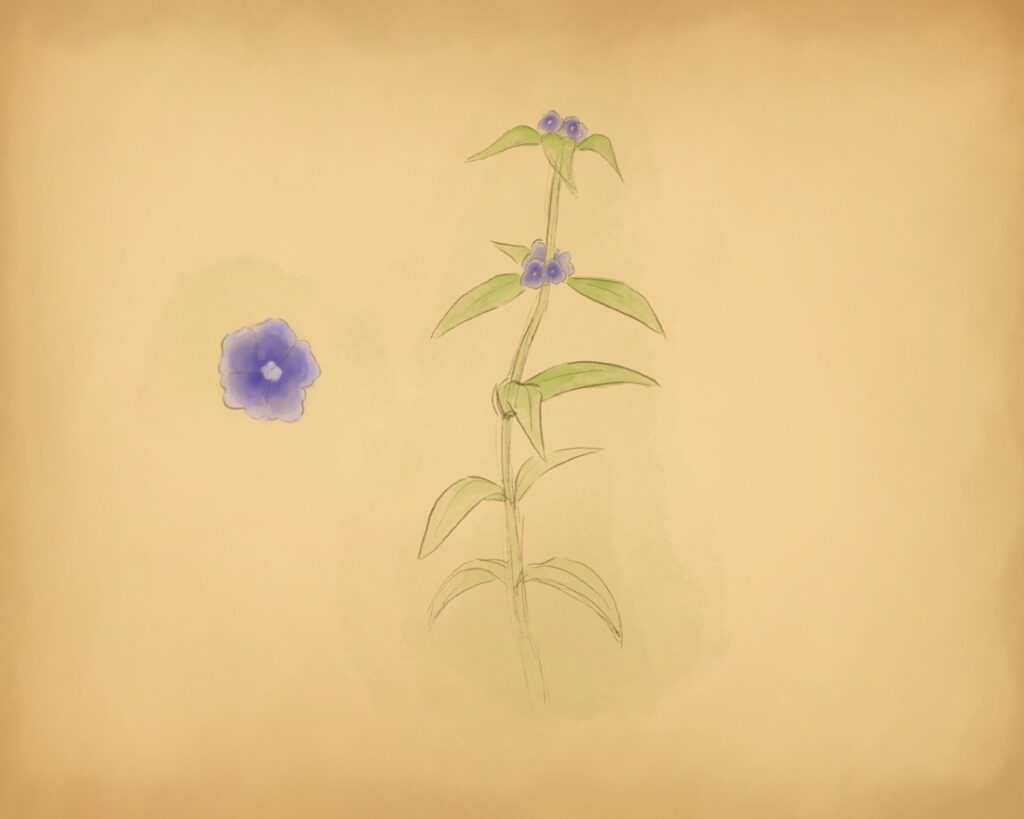
Alkanet has slim, long leaves that grow up and droop back down. Alkanet has dark blue flowers which grow in a ring of five to eight flowers around the stalk of the plant. When the plant is mature enough to harvest, there will be two or more of these rings of flowers frowing on the plant. The leaves of alkanet will grow in pairs along the stem, until it reaches the rings of flowers, in which case there will be three leaves growing just below the ring. Alkanet flowers can be used to restore intelligence, resist poisons, and to give the effect of Light. Keep in mind alkanet is often confused with viper’s bugloss, which I will discuss later in this guide.
Blackberries
You may be tempted to avoid more of the thorny, unruly bushes you will pass by while foraging, but take care to spare a glance in case its a blackberry bush. You’ll have to contend with the thorns, but if you take care you can harvest the berries for potions to restore fatigue, fortify endurance, and resist shock damage. Or, to take on the road as a delicious snack. The berries are small and range from dark blueish purple to black. The berries will grow as clusters towards the ends of branches of the shrub. The plants are bright yellowish green, with spiky leaves and stems.
Cinnabar Polypore
Additionally to the unruly bushes, pay attention to the trunks of trees as you pass them by. On occasion you may find cinnabar polypore mushrooms growing along the trunks of large trees. The mushroom grows like a shelf along the trunk, and ranges in color from yellow to orange to brown. The yellow cap of cinnabar polypore can be used to restore and fortify endurance. Red caps can be used to restore agility and in potions to Shield onself. Both variants can be used in poisons to damage personality.
Columbine
Columbine is an easily identifiable plant, due to the fiery red flowers. The leaves are much darker green than the stems, and small. The stems for the flowers are yellowish green. The flowers resemble bells drooping down, ranging from deep red to bright orange. The plant will grow about to the height of the hip, though sometimes taller. The root pulp of the plant can be used to resist frost, restore personality, and fortify magicka.
A Note on Dangers:
It is easy to lose track of your surroundings when focused on foraging. But it is important to remember you are not alone, and to pay close attention. While the West Weald is relatively safe, it is still home to dangers just like any other region of Cyrodiil. Lone wolves are fairly common, and though they can be easily avoided, you have to spot them first to be able to navigate around them. I’ve seen black bears, and I suspect depending on the time of year you may find them alongside brown bears, coming down from the Colovian Highlands and out of the Great Forest. Imps lurk around the entrances to caves. To the far west, near the Gold Coast, I’ve come across boar. And once, I was arms deep picking blackberries off a bush, when a giant rat leapt out from the brush at me!
Unfortunately, though, I have found the greatest danger to not be from wildlife, but rather bandits on the roads. Being a lone traveler means signaling oneself as an easy target. Thankfully the bandits I have come across typically only travel alone as well. If you run into trouble, and aren’t prepared to fight, I suggest heading back to the Gold Road and running until you spot a patrolling guard.
Dragon’s Tongue Plant
Dragon’s tongue is a plant with yellow and green leaves, and a bright yellow flower, that grows about chest height. The leaves are slim and angular, with a bright yellow stripe down the center and green borders. The plant will have a single flower at the top of the stalk, with large yellow, upturned petals. The plant can be used to resist fire, and interestingly can be used to restore or damage health depending on the other ingredients its combined with.
Domica Redwort
This plant tends to be found along the eastern sections of the West Weald, close to the border with Elsweyr. A large, dark red flower sits atop the stalk of the plant, with green leaves. The plant typically grows to the height of ones hip, though I’ve seen a few grow as tall as ones’ chest. The leaves resemble a bird’s feather, leaflets fanning out from the center of the leaf. The flower’s petals downturn, and there is a pale yellow cluster of seeds at the center of the flower. The flower can be used to resist frost, damage health as a poison, or to cure poison.
Elf’s Cup Cap
As you forage, pay close attention to the smaller rocks and boulders around the West Weald in case you spot the wonderfully rare Elf’s Cup Caps. These deep pink mushrooms, as their namesake suggests, grow to resemble a drinking cup. I’ve most often spotted them growing in clusters of three, though occasionally there will only be a single one, or a pair. These mushrooms may be used as a poison to damage willpower, or to cure disease and fortify strength. Though you may be tempted to just sell them, as each Elf Cup Cap can fetch a fair price, about three to five gold per cap.
Emetic Russala
This bright red mushroom can be confused for Fly Amanita, which I list later in this guide, but there are a few key differences to help you correctly identify the two. Emetic Russala may have scratches of white along the top of the cap, the dark red scratched away to reveal the white flesh underneath. The caps are large, over a hand length across in width. The cap of Emetic Russala can be used to restore agility and in potions to shield oneself, or as a poison to damage personality.
Flax
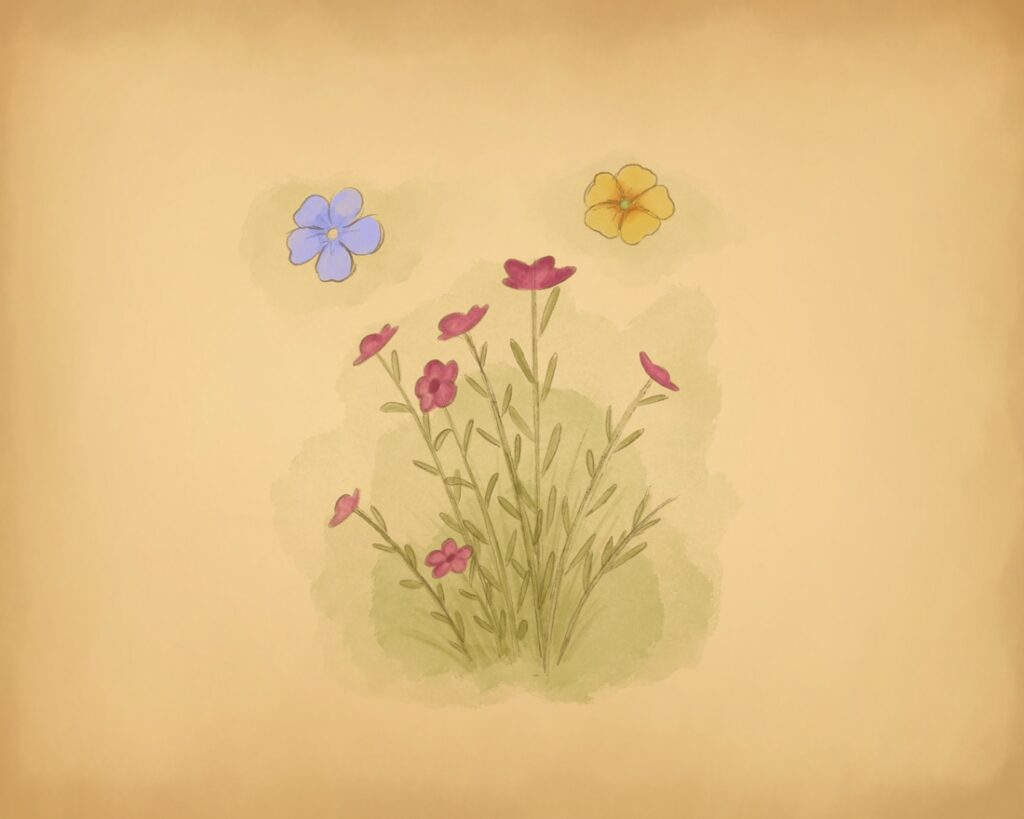
Flax is the most common plant you will find in the West Weald. There are three varieties- one with dark reddish pink flowers, one with light blue flowers, and a third with pale yellow flowers. I’ve noticed the blue variety growing more towards the west, and the yellow variety growing more towards the east, with the pink variety throughout the entirety of the West Weald. Flax have small flowers, about the size of a gold coin. The leaves are very tiny. Flax seeds can be used to restore magicka, and in potions for the Feather and Shield effect. While the colors may differ, the effect of the seeds and overall physicality remain the same.
Fly Amantia
These mushrooms are fairly common and easy to identify, though do take care not to confuse them with Emetic Russala. Fly Amanita have dark red caps with white spots, and white flesh under the cap. Fly Amanita are typically smaller in size than Emetic Russala, and a brighter red hue. They vary in size from as large as ones hand, to being small enough to fit in the palm easily. The cap of the mushroom can be used to restore agility and health, and as a poison to burden.
Lady’s Smock
Lady’s Smock can be identified by its pale purple flowers at the top of the plant’s yellowish green stalk. Towards the base of the plant the leaves are more rounded, whereas up the stalk they lengthen into small, thin leaves. The offshoots of leaves will grow in pairs. The plant will grow four to five flowers in a cluster at the very top of the plant. The flowers are a bit larger than the size of a gold coin, with four petals each. The leaves of Lady’s Smock can be used in potions to restore intelligence and resist fire, or as a poison to damage fatigue.
A Note on Foraging Alone:
Traveling through the wilderness alone may prove a useful time to practice certain skills that may be frowned upon in the city. While most of the time will be spent gathering plants, there is a great deal of time also spent simply walking and searching. Personally, I use this time to practice my spellcasting. In the wilderness you need not worry about perfection or prying eyes. Lately I’ve been practicing illusion spells, as I am still a novice at the craft and wish to move on to more advanced spells.
Morning Glory
There are a few locations where morning glory can be found. Being a climbing plant, you can often find them hanging over the tops of large rocks and around the entrance to caves. The flowers are purple and resemble a trumpet. The leaves are small and round with a single point at the end, and dark green. If you dig up the root pulp you can use it as a poison to damage willpower and cause Burden, or to shield against frost.
Motherwort
Motherwort grows to a similar height as Viper’s Bugloss and Alkanet, but has small, pinkish-purple flowers. The leaves are lobed and yellowish green. Similar to Alkanet, the flowers grow at the same point along the stem as the leaves emerge. Motherwort sprigs are useful for resisting poison, but also can be used in poisons to damage fatigue and to silence spellcasting.
Nightshade
Take great care when harvesting nightshade. Nightshade can be confused with other plants for the beginner forager, so take great care. Nightshade’s leaves are large, with clear veins, longer than the length of ones hand, and yellowish green. The dark purple flowers are small, growing in clusters of three to seven, with a yellow cone at the center of each flower. Nightshade is most often used as a poison to damage health and luck, and cause Burden.
Peony
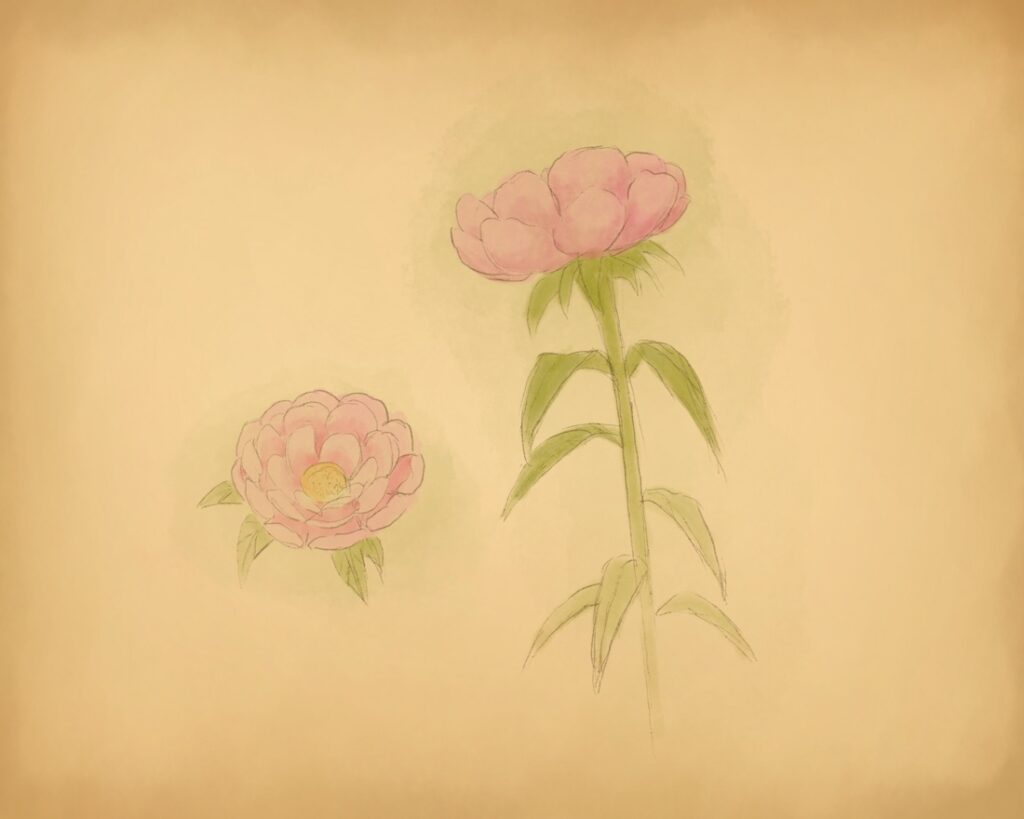
Peony is one of the easiest plants to identify. The single flower is key, sitting on a thin, green stalk about four feet tall. The petals of the flower are bright pink and curved upwards into a cup. The flower itself is quite large, almost the size of a young child’s head. The leaves of the plant are thin and pointed, drooping down. The small yellow seeds in the center of the flower can be used in potions to restore strength, or as a poison to damage health or speed.
Primrose
You may see primrose tucked away next to stone structures or rocks. This plant is small, barely reaching above ankle height. The flowers are light pink, with dark pink edges along the petals, and yellow centers. The flowers grow in clusters of three to five, with five petals each. The leaves are large and grow just shy of the length of ones hand. The leaves are oblong and more of a pale, cooler toned green. The leaves of the plant can be used to restore willpower and personality, and to fortify luck.
Sacred Lotus
Sacred Lotus will be found growing in water, the flowers floating on the water’s surface. The roots of the plant burrow in the mud of shallow ponds, growing stalks that reach the surface. The leaves are circular, almost a full circle save for a small cutout, resembling a thin slice of pie taken away. The flowers are white with yellow seeds at the center. The seeds of the plant can be used to resist frost, as a poison to damage health, or in potions to give the Feather effect.
Somnalius Plant
Somnalius is a unique plant that is easily identified by its cones, but not very common in the West Weald. The plant grows short, under knee height, though the leaves are quite large, up to the length of ones leg. The leaves are made of intricate, tiny leaflets that branch out from the plant and resemble a bird’s feather. In the center of the plant will be two to three yellowish-brown cones on stalks, about the size of ones hand. The fronds of this plant can be used to restore speed, fortify health, or as a poison to damage ones’ endurance.
Strawberries
Strawberry bushes are not difficult to identify, but given their short height, may easily go unnoticed. Thankfully, their bright red berries are unmistakable, and will be tucked under the leaves of the plant. Each plant will have two to four small white flowers with a yellow center, and light yellowish green leaves with small lobes. Strawberries can be used to restore fatigue and cure poison, or as a poison to damage health, but on its own simply serves as a wonderful pairing with sweet pastries.
Viper’s Bugloss
Viper’s Bugloss can grow quite tall- I’ve seen plants reach over my head before. Along the full length of the stem it grows dark blue flowers, about a dozen or two. Due to the color of the flowers, this plant is often confused with alkanet. One key difference is the leaves, which are spiky and yellow green, and will each be paired with a flower. Additionally the flowers grow along the full length of the stem, unlike alkanet, which has flowers growing in a ring. Another important difference is that, with Alkanet, you are harvesting the flower, unlike Viper’s Bugloss with which you harvest the leaves. The leaves of this plant can be used to resist paralysis, cause Burden, and most interestingly, to give one Nighteye to see in the dark.
Water Hyacinth
Water Hyacinth can be found along the water’s edge. The flowers of the plant are purple, lighter along the edges of the petals. The leaves are round, about the size of the palm of the hand, with lighter yellow green edges and dark green centers. Each stalk has about three flowers, and each plant typically grows two to three stalks. The nectar from the flowers can be used as a poison to damage fatigue and luck, or to restore magicka.
A Note on Potions and Poisons:
Though you may not be an alchemist, I thought it best to list some of the potions you can create from the ingredients found in the West Weald. I highly recommend everyone learn the basics of alchemy. Even if all you do is sell the potions and poisons you make, in nearly every instance they will fetch a higher price than the raw ingredients.
Redwort flowers and strawberries can be used to create potions to cure poison. Blackberries and Yellow Cinnabar Polypore caps can be used to create potions to fortify endurance, though this may require a more experienced alchemist to prepare the blackberries correctly. Red Cinnabar Polypore caps, Emetic Russula caps, and Flax seeds can all be used to create potions of Shield.
Many of the plants can also be used for their negative effects as poisons. Fly Amantia cap, Morning Glory root pulp, Nightshade, and Viper’s Bugloss leaves can all be used to create poisons of Burden. Lady’s Smock leaves, Motherwort sprigs, and Water Hyacinth nectar can be combined into poisons to damage fatigue. Dragon’s Tongue, Nightshade, Peony seeds, Redwort flowers, and Strawberries can all be used to create poisons to damage health.
If you are new to alchemy, it is always best to err on the side of caution. Find a teacher who can show you how to prepare components, and take great care when combining new ingredients for the first time. Also, be sure to know how ingredients with similar properties will have compounding effects. For example, combining Red Cinnabar Polypore caps with Emetic Russula caps will create a potion to Restore Agility on oneself, but the potion will have the added effects of Shield, which is a nice bonus, and damaging ones’ personality, which is a not-so-nice bonus. Be sure to know the full range of both positive and negative effects a potion will have.
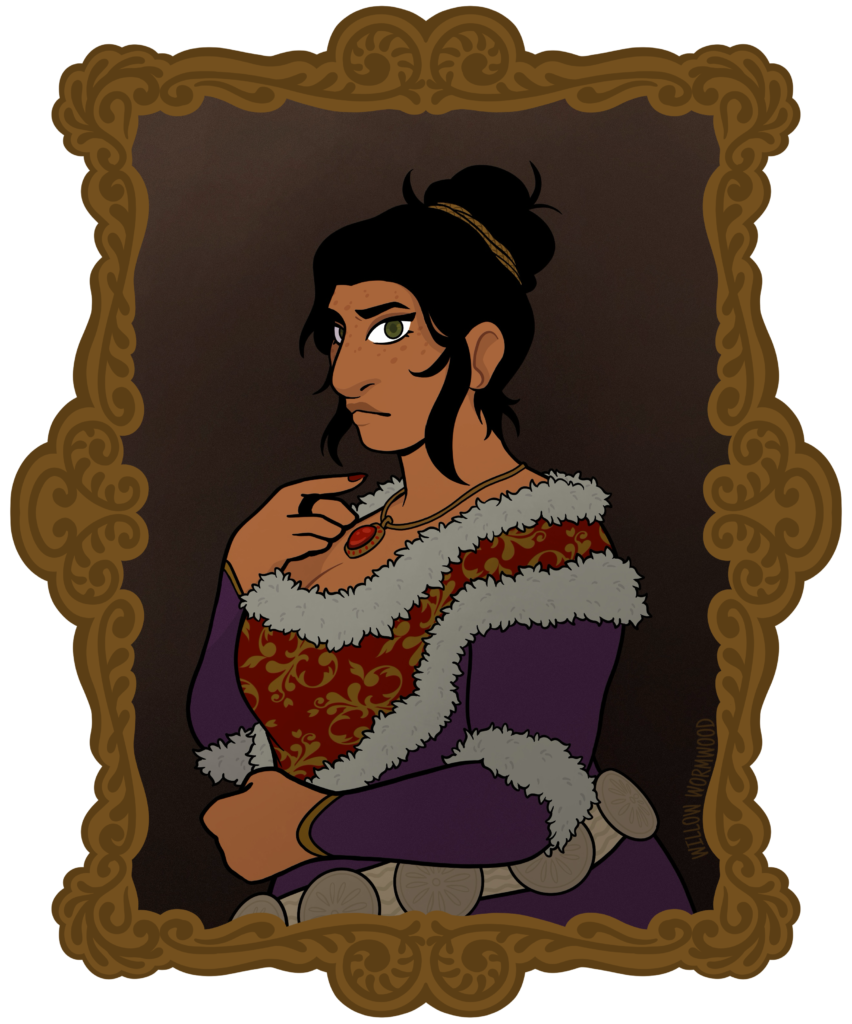
Imogen Valencia, Author and Illustrator of “A Forager’s Guide to Cyrodiil”
Leave a Reply