Written and compiled by Imogen Valencia.
Bordering the lands of Black Marsh and Elsweyr, the marshlands of Blackwood are known for their hot, muggy climate. Notoriously difficult to navigate, with its shrouding darkness from the thick tree canopies, and difficult terrain caused by mud and the knees of trees ready to trip, Blackwood can be intimidating for the unfamiliar forager. But I urge you, reader, to give Blackwood a chance. You may find the trips into the swamp well worth it for the alchemical ingredients you can find in its depths.
I would recommend beginning in Leyawin, though you can also head south from Bravil. If on the road, I’d recommend the Drunken Dragon Inn. It’s a ways off the Yellow Road, boardering the Nibenay Valley and Blackwood, but I nice place to stay if you’re traveling between Leyawin and the Imperial City.
Arrowroot Plant
I wish to provide a disclaimer that, while I feel it best to include on the list rather than not, I have only seen arrowroot in Blackwood growing at a shrine in the wilderness. I do not know if it is only found at this shrine, or if there may be other plants growing throughout Blackwood. Arrowroot plants grow quite tall, to about chest height. The plant has very thin stems, which stand out compared to the large, oblong leaves. The leaves will be dark green and about a hand and a half in length. The flowers are small, pale purple, and grow in clusters of three. There will only be two or so clusters per plant. The flowers resemble trumpets, with a flared base and mouth. The plant can be used to restore agility, fortify strength, damage luck, or cause Burden.
Bog Beacon
Bog Beacons are small mushrooms that only grow to about ankle height. They are easily identified by their bright yellow ‘beacon’ at the top of the white stalk. This yellow cap is fully enclosed and circular. They tend to grow in clusters of three to five, typically at the base of trees. The Bog Beacon asco cap can be used to restore magicka, damage personality and endurance, or give the Shield effect.
Clouded Funnel Cap
This mushroom is a pale greyish white color. The cap is wavy, and can range in size from about a hand and a half in width to the size of one’s torso, though the ones I’ve seen in Blackwood tend to be on the larger side. I tend to find this mushroom growing in clusters of three to five, and growing around the base of trees. The cap of this mushroom can be used to restore and fortify intelligence, and damage endurance.
Domica Redwort
A large, dark red flower sits atop the stalk of the plant, with green leaves. Domica Redwort typically grows to the height of ones hip, though I’ve seen a few grow as tall as ones’ chest. The leaves are very thin and resemble a bird’s feather, leaflets fanning out from the center of the leaf. The flower’s petals downturn, and there is a pale yellow cluster of seeds at the center of the flower. The flower can be used to resist frost, damage health, cure poison, or to grant Invisibility.
Dragon’s Tongue Plant
Dragon’s tongue is a plant with yellow and green leaves, and a bright yellow flower, that grows about chest height. The leaves are slim and angular, with a bright yellow stripe down the center and green borders. The plant will have a single flower at the top of the stalk, with large yellow, upturned petals. The plant can be used to resist fire, create a fire shield, and interestingly can be used to restore or damage health depending on the other ingredients its combined with.
A Note on Dangers:
I have not seen wolves, bears, or mountain lions in Blackwood. Mudcrabs live all along the shorelines of the Topal Bay, so take care when harvesting Sacred Lotus and Water Hyacinth. But generally mudcrabs are easily avoided, and easily dealt with. While this may give you the impression Blackwood is safer than other regions, this is unfortunately not the case.
I am not sure whether it is a natural beast or not, but I once fought a creature known as a Land Dreugh that was quite an arduous battle. It took at least fifteen arrows to fell it. The creature was quite large, with the torso the size of a large man, legs resembling that of a crab, plates of hard chitin protecting it.
The Land Dreugh is a prime example of some of the stranger, and far more dangerous creatures, that roam Blackwood. I have also fought a spriggan, and seen wil-o-wisps roaming the marshlands as well. While all of Cyrodiil holds beasts and monsters, take extra care in the Blackwood swamps.
Elf’s Cup Cap
I found Elf’s Cup cap growing at the same shrine as the arrowroot in Blackwood, though I suspect it may be growing in other portions of the region as well. These deep pink mushrooms, as their namesake suggests, grow to resemble a drinking cup. I’ve most often spotted them growing in clusters of three, though occasionally there will only be a single one, or a pair. They will always grow on the surface of a rock. These mushrooms may be used to damage willpower and intelligence, cure disease, and fortify strength. Though you may be tempted to just sell them, as each Elf Cup Cap can fetch a fair price, about three to five gold per cap.
Green Stain Cup
This mushroom stands out from other fungi for its color, a rich, vibrant teal. Green Stain Cup grows to about ankle height, though the ones in Blackwood can grow much larger. I found one cap that was bigger than my torso. They tend to grow in clusters at the base of trees. The cap of Green Stain Cup is upturned, with the edges of the cap folded over. The caps can be used to restore fatigue, damage speed, or reflect damage.
Lily of the Valley
One of my favorite plants, Lily of the Valley grows about to ones hip in height and has beautiful, drooping white flowers. The flowers grow along one or two central stalks and resemble small white bells, cupped and downturned. The leaves are quite large, oblong and tapering into a sharp point. The leaves furl around the stalks of the plant, and a yellowish green in hue. They are about as long as ones arm, and the length of a forearm in width. The nectar from the flowers are often confused with Tiger Lily Nectar, due to its appearance and the fact that they hold the same alchemical properties. The nectar is used to restore endurance, damage strength, and as a component in potions of Water Walking.
Primrose
In Blackwood I have only seen primrose growing near the small village of Blankenmarch, but there may be others scattered in the wilderness. Often you will find primrose tucked away next to stone structures or rocks. This plant is small, barely reaching above ankle height. The flowers are light pink, with dark pink edges along the petals, and yellow centers. The flowers grow in clusters of three to five, with five petals each. The leaves are large and grow just shy of the length of ones hand. The leaves are oblong and more of a pale, cooler toned green. The leaves of the plant can be used to restore willpower and personality, fortify luck, and damage strength.
Sacred Lotus
Sacred Lotus grows along the shores of the Topal Bay, sometimes in large clusters of ten or more. The roots of the plant are burrowed in the mud of shallow ponds, growing stalks that reach the surface. The leaves are circular, almost a full circle save for a small cutout, resembling a thin slice of pie taken away. The flowers are white with yellow seeds at the center. The seeds of the plant can be used to resist frost, damage health, give the Feather or Dispel effect.
A Note on a Strange New Plant:
I must admit that, in my journeys foraging, I have come across a peculiar plant with interesting alchemical effects, though I do not know enough about it to feel confident adding it to this list. Perhaps at the time this guide is read, more will be known about this plant.
One of its strange properties is that it emanates a constant, low, ringing or humming sound. Another strange property is the plant never seems to regrow once it has been picked, hence another reason I will not be including it as a traditional entry to this guide. I do not wish to contribute to the over-harvesting of this fascinating plant.
The plant itself is not very tall, only growing to about knee height. It will always grow close to water, whether that be still or running water. It has dark, blue-green leaves, with one clear center vein down the leaf, and looping lobes on the leaves. It often sticks just above the ground, leaving some of the roots visible and exposed.
I have collected and used the entirety of the plant in alchemical experimentation, and found that the effects the plant provides are odd. With it, you are able to create poisons to drain health, fatigue, agility, and speed. Often plants have a mix of positive and negative effects and conditions, so its strange to find a plant that only ever drains.
I hope to continue my experiments, and perhaps seek one more knowledgeable on the subject than I to learn more about the plant.
Somnalius Plant
Somnalius is a unique plant that is easily identified by its cones. The plant grows short, under knee height, though the leaves are quite large, up to the length of ones leg. The leaves are made of intricate, tiny leaflets that branch out from the plant and resemble a bird’s feather. In the center of the plant will be two to three yellowish-brown cones on stalks, about the size of ones hand. The fronds of this plant can be used to restore speed, fortify health, damage endurance, or give the Feather effect.
St. Jahn’s Wort
In Blackwood I have only seen St Jahn’s Wort growing near the small village of Blankenmarch and the nearby Ayleid structure of Veyond, though there may be other plants scattered throughout the wilderness. This plant can grow to chest height or taller, though often on the shorter side in Blackwood, and has pale yellow flowers atop a single stalk. Four to six flowers grow in a cluster at the top of the stalk, each about the size of a gold coin. They each have five petals and visible anthers, and the flower can fit comfortably in the palm of ones hand. The leaves a long with rounded tips, and grow in pairs along the stem of the plant. There will typically be six to ten leaves per plant, and each leaf is about the length of one’s hand. The nectar from the flowers is used to resist shock, cure poisons, damage health, or give the Chameleon effect.
Stinkhorn
Named for their putrid smell, Stinkhorns can be identified by their peachy, pale pinkish-red hue. They have a broad base that reaches about a hand length in height, and then splits into four separate curved tendrils, rather resembling tentacles. At the very base of the plant is a white mass, which looks as though a bird’s egg has been split open to reveal the mushroom. The cap of stinkhorn can be used to damage health, restore magicka, or to provide the Water Walking and Invisibility effects, making it quite sought after as an alchemical ingredient.
Tiger Lily
In Blackwood I have only seen Tiger Lily growing near the small village of Blankenmarch, but there may be others scattered in the wilderness. The plant can grow to about chest height, though seems to be on the smaller side when grown in Blackwood. The leaves are thin and long, and a pale green color. The leaves grow along the single central stem in clusters of three. The flower at the top of the stalk is bright orange, with dark maroon spots in the center, and maroon colored anthers that stick out of the flower. The petals would resemble a trumpet, but are peeled back to reveal the anthers. There are typically two flowers per plant. The nectar from the flowers can be used to restore endurance, damage strength and Willpower, and give the Water Walking effect.
Water Hyacinth
You can find this plant buried in the muddy shorelines of Blackwood, often beside Sacred Lotus flowers. The flowers of Water Hyacinth are purple, lighter along the edges of the petals. The leaves are round, about the size of the palm of the hand, with lighter yellow green edges and dark green centers. Each stalk has about three flowers, and each plant typically grows two to three stalks. The nectar from the flowers can be used to restore and fortify magicka, or as a poison to damage fatigue and luck.
A Note on Potions and Poisons:
While Blackwood may not provide the largest diversity of plants and mushrooms, the ingredients you can forage can be used to create truly wondrous potions and poisons.
You can use Stinkhorn cap and Tiger Lily nectar for a potion of Water Walking. Or Stinkhorn cap with Redwort flower for a potion of Invisibility. Though do be careful, as another effect of the potion will be damaging health to the one who drinks it. Weigh the pros and cons to every mixture- it may be worth taking the damage if it means turning invisible and living another day.
Bog Beacon Asco cap, Clouded Funnel cap, and Somnalius fronds can all be combined into a poison to damage endurance. Dragon’s Tongue, Green Stain Cup cap, Redwort flower, Sacred Lotus seeds, Stinkhorn cap, and St Jahn’s Wort nectar can all be used for a damage health potion.
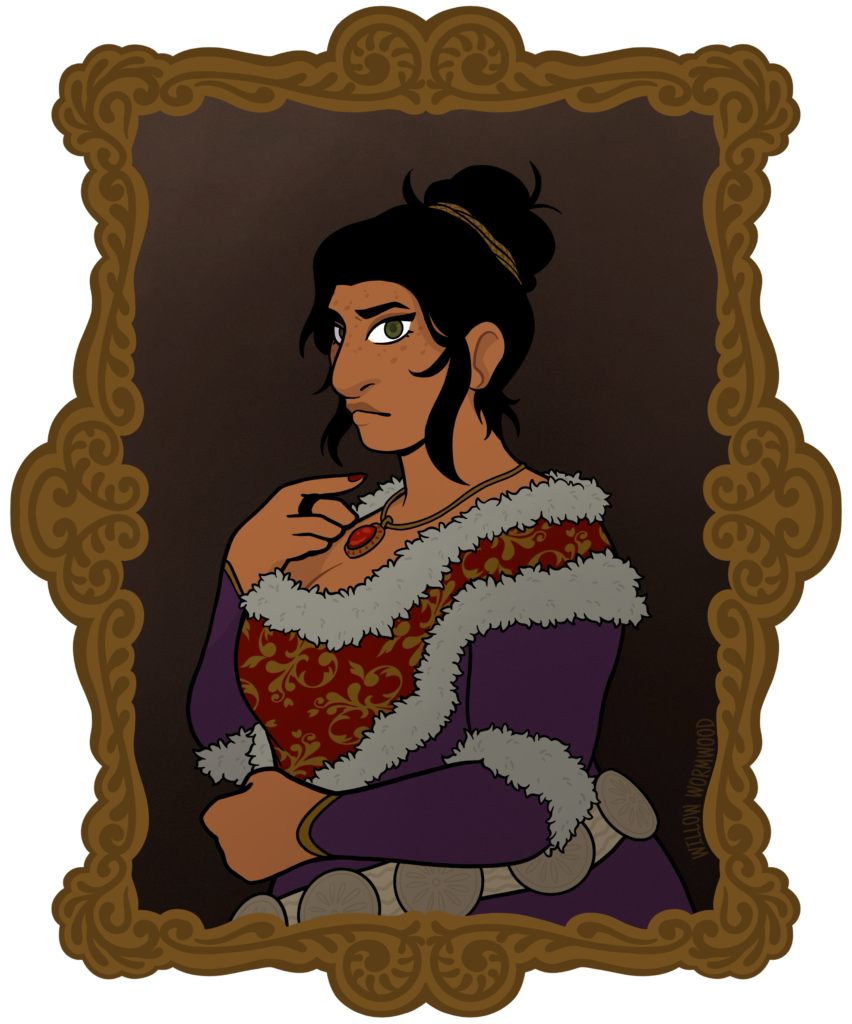
Imogen Valencia, Author of “A Forager’s Guide to Cyrodiil”
Leave a Reply